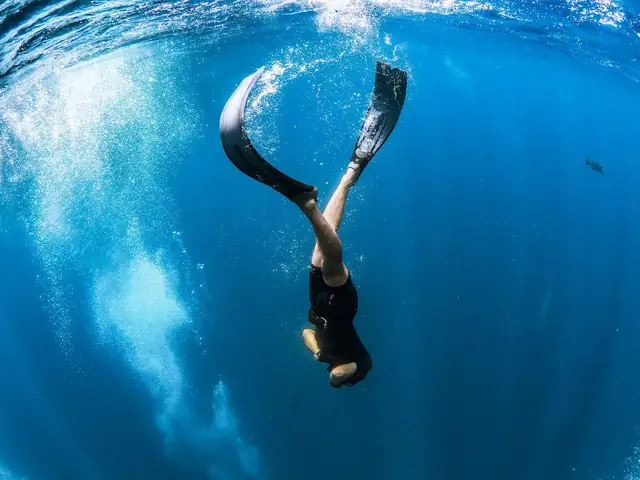


Mammalian Dive Reflex (MDR): Awakening Your Oceanic Instincts
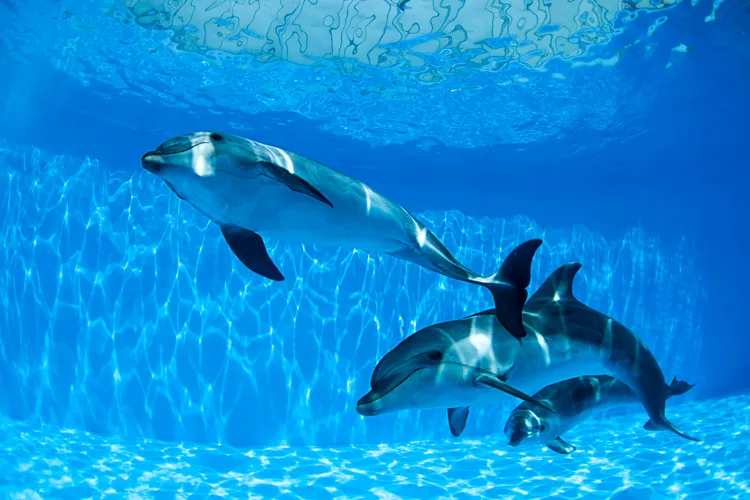
The Mammalian Dive Reflex (MDR) is the set of short-term adaptations your body makes during any breath-hold. Humans share reflexes similar to those of dolphins and seals, although to different degrees.
MDR isn't something you learn to do; it happens automatically. It is triggered by facial immersion in water, the breath-hold itself (hypoxia and rising CO2), increasing ambient pressure as you go deeper, and cold water.
Bradycardia (Heart Rate Drop)
A slower heart rate reduces the energy consumed by your heart and slows metabolic processes, conserving oxygen for vital organs. The amount of slowing differs between individuals and with training.
Peripheral Vasoconstriction
Blood vessels in your hands and feet constrict, pushing blood towards your core to optimize oxygen supply to vital organs and the brain. As a result, limb muscles tire faster during a breath-hold.
Blood Shift
As you go deeper, your lungs compress. Blood vessels in the lungs expand and fill with blood to compensate for the loss of air volume, helping them cope with the rising pressure. At the same time, vessels around vital organs (heart, brain, lungs) dilate (central vasodilation) to allow more blood flow.
The Spleen Effect
Your spleen contracts and releases stored red blood cells containing hemoglobin into the bloodstream, increasing the blood's oxygen-carrying capacity.
At OxyFree Danang, we guide you through body-scan relaxation before diving. Remember that MDR does not replace safety rules: never dive alone and always end a dive with reserves to spare.
Learn freediving in Da Nang with OxyFree Danang
Molchanovs courses from beginner to advanced, taught directly by Instructor Tran Van Loc.