

The 'Never Dive Alone' Rule & The Lifesaving Buddy System in Freediving
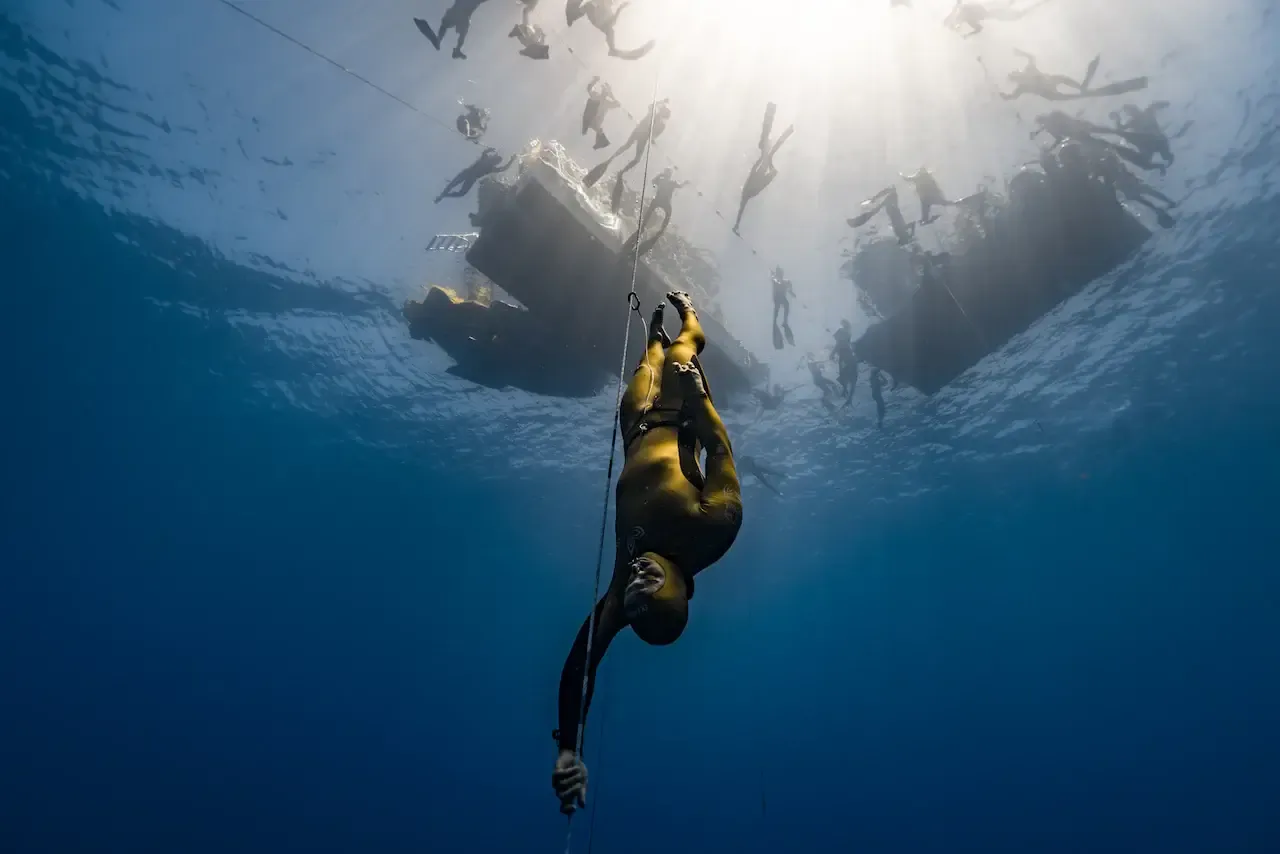
If there is one inviolable commandment that every freediver must engrave into their soul, it is this: 'Never Dive Alone'. Whether you are a beginner attempting a 1-minute breath-hold in a pool or a world champion diving beyond 100 meters, the ocean makes no exceptions when physiological boundaries are crossed.
Blackout and Samba (LMC)
A blackout is loss of consciousness caused by hypoxia. A Samba (Loss of Motor Control) is a late warning sign that can precede a blackout, with muscle contractions in the neck, shoulders and arms. Both occur when you push a breath-hold beyond your limits. As you approach the surface, falling pressure rapidly lowers the partial pressure of oxygen in your lungs, so a blackout can occur in the last metres of a dive or just after surfacing, and you can still black out while breathing at the surface. The Molchanovs curriculum stresses that blackouts must be avoided at all times: end every dive with reserves to spare.
The Role of a Trained Buddy
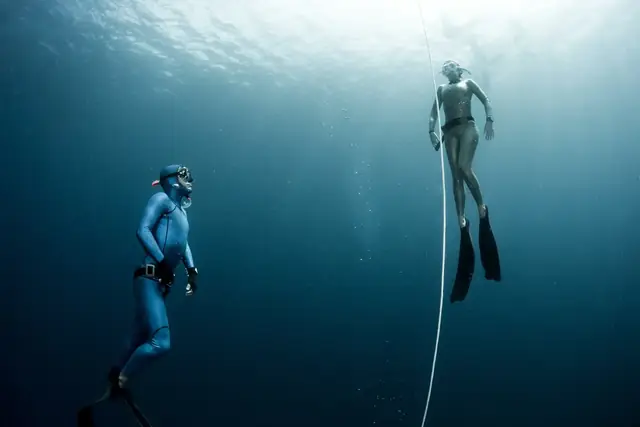
A buddy is not someone watching from the shore. The buddy acts as a safety freediver, monitoring your condition before, during and after the dive and ready to intervene. In depth disciplines you agree on the estimated dive time and a meeting depth (at least one-third of the target depth) to ascend together. After surfacing, your buddy reminds you to do recovery breathing and watches how you recover.
Clear, Blow, Talk after a blackout
First bring your buddy to the surface as fast as possible, keeping their face and airways out of the water. Then: Clear - remove the mask and any facial equipment; Blow - blow lightly onto the skin below their eyes; Talk - call their name and ask them to breathe. If they have not regained consciousness within 10-15 seconds, give rescue breaths, and start CPR and call emergency services if there is no pulse. This is only a summary: rescue skills must be learned and practised in person with an instructor.
A Vital Warning on Solo Breath-Holding
If you black out with your airways submerged and nobody is with you, you will not recover on your own and the danger of death is real. Never hold your breath alone in water, including in a bathtub, a private pool or on a secluded beach.
Building a Safety Culture and Proper Mindset in Freediving
In freediving, safety is not merely a technical rulebook, but an instinct and vital philosophy that shapes every diver's mindset. The true measure of a freediver lies not in the depth reached or the minutes held, but in their discipline, profound respect for physiological boundaries, and unconditional commitment to protecting their buddy. Always equip certified buoys and safety lanyards, thoroughly brief dive plans before every descent, and never compromise safety for the sake of personal records.
Learn freediving in Da Nang with OxyFree Danang
Molchanovs courses from beginner to advanced, taught directly by Instructor Tran Van Loc.